The molded case circuit breaker ( MCCB ) is an essential component in the electrical system that provides overload protection and short-circuit protection. In most cases, the molded case circuit breaker is installed on the main switchboard of the facility to easily shut down the system if necessary. MCCB has a variety of sizes and ratings according to the size of the electrical system.
This article will introduce the characteristics of typical MCCB, their working principles and optional types.
What Is A Molded Case Circuit Breaker?

Molded case circuit breaker is an electrical protection device used to protect the circuit from overload, short circuit and other electrical faults. With higher capacity to handle larger currents, molded case circuit breakers are suitable for industrial and commercial applications.
The name of MCCB comes from the molded insulation shell of its internal components. This robust enclosure protects the circuit breaker from external damage and environmental factors to ensure long-term reliability.
The molded case circuit breaker supports adjustable tripping settings that allow users to customize circuit breakers according to different load requirements and make them highly flexible in different applications.
Compared with the household miniature circuit breaker (MCB), the key differences of MCCB are :
Current Rating: The rated current range of MCCB is very wide, usually from 15A to 2500A or even higher.
Adjustability: Many molded case circuit breakers allow users to adjust tripping settings according to specific load requirements, while MCB settings are usually fixed.
Click on the relevant articles to learn more about the difference between MCB and MCCB.
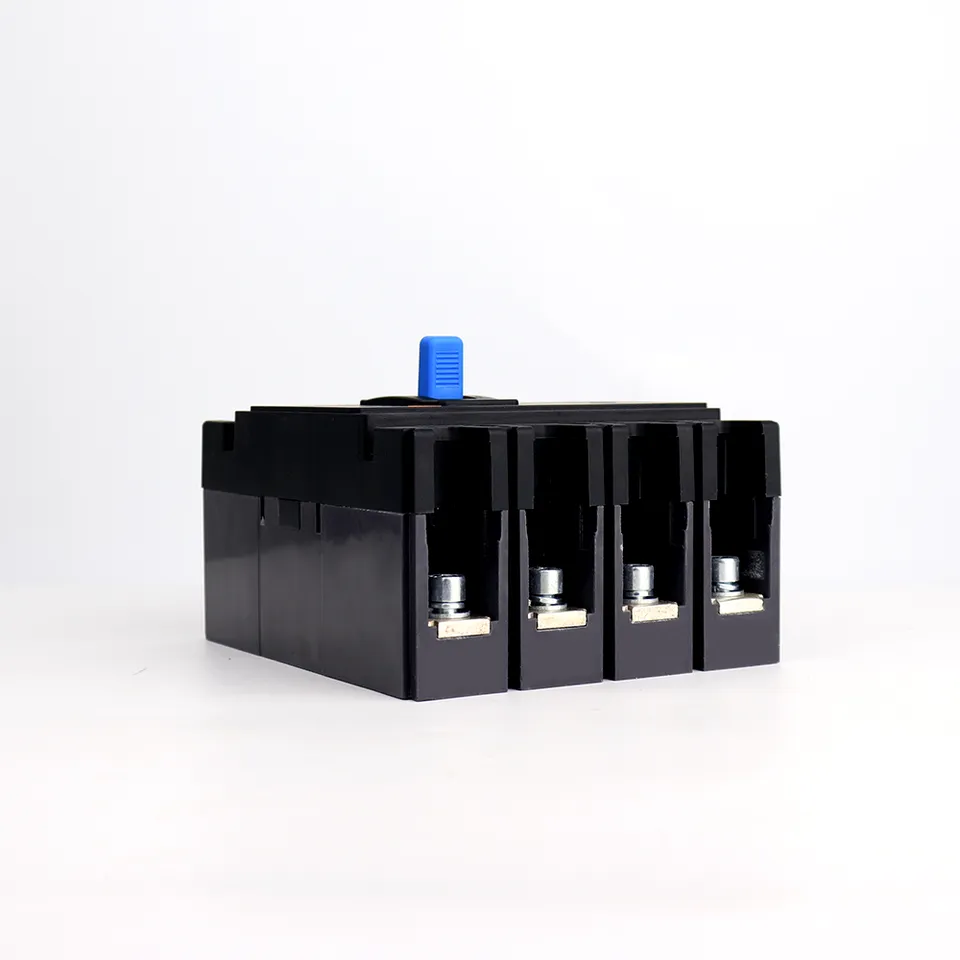
How Does the Molded Case Circuit Breaker Work?
The protection mechanism of MCCB combines thermal induction and magnetic induction technology to ensure rapid response under different fault conditions. In addition, it also contains an efficient arc extinguishing system.
Overload Protection – Thermal Trip for Overload
When the current slightly exceeds the rated value and continues for a period of time such as motor overheating, the bimetallic strip inside the molded case circuit breaker will be bent due to heat.
Inverse Time Characteristic: The larger the current, the shorter the time required for the bimetal sheet to bend and trigger tripping. This mechanism allows the circuit to withstand a short start-up current such as motor start-up, but cuts off the power supply when it is continuously overloaded.
Short Circuit Protection-Magnetic Trip for Short Circuit
When the circuit is short-circuited (the current instantaneously surges to more than 10 times the rated value), the huge current generates a strong magnetic field through the solenoid.
Instantaneous Action: Magnetic force directly pulls the armature, instantly unlocks the locking mechanism, and cuts off the circuit in a few milliseconds to prevent electrical fire.
Arc Extinguishing System
A high temperature arc will be generated when the contact is separated under high current. There is an arc chamber (Arc Chute) inside the MCCB. The long arc is cut into a short arc by a metal grid, and the arc is elongated, cooled and extinguished by magnetic force.
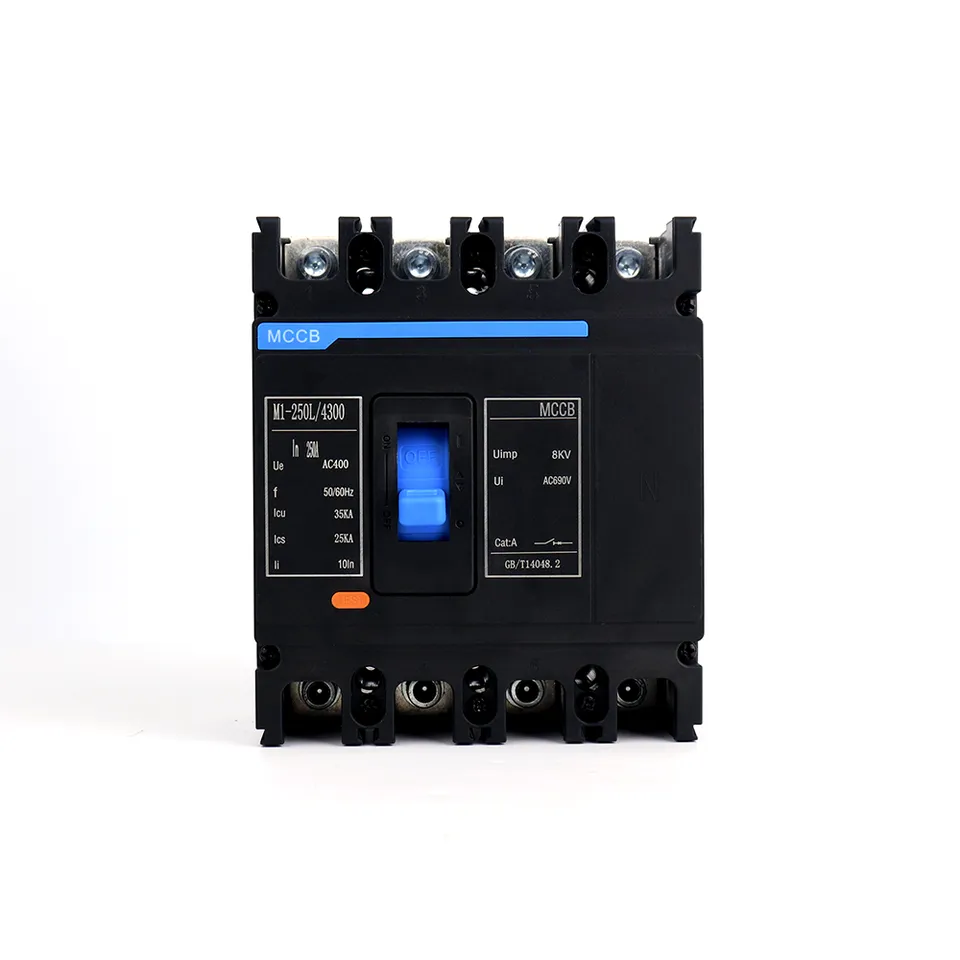
Types of Molded Case Circuit Breakers
According to the different techniques of the internal tripping unit, molded case circuit breaker is mainly divided into three types, which are suitable for different accuracy requirements :
| Table: Types of Molded Case Circuit Breakers | |||
|---|---|---|---|
| Feature | Thermal-Magnetic MCCB | Electronic Trip MCCB | Microprocessor-based MCCB |
| Core technical | Bimetal sheet & electromagnet | Current transformer & dedicated electronic tripping chip | High precision sensor & microprocessor ( MCU ) |
| Protection settings | Fixed or limited adjustable | Wide range accurately adjustable | Precisely adjustable in a wide range and programmable |
| Action precision | Low, affected by temperature | High, not affected by temperature | Very high, stable and reliable |
| Additional function | Basically no | Grounding fault protection, state indication | Measurement, communication, monitoring, diagnosis, recording |
| Price | Lower | Medium | High |
Thermal-Magnetic MCCB
Thermal-Magnetic MCCB is the most classic, most widely used and lowest cost MCCB. It is suitable for most conventional power distribution circuits and motor protections that are not demanding and have stable loads and is the most cost-effective choice.
Working Principle:
- Thermal Protection: Overload protection is realized by using the principle of thermal bending of bimetal sheets. The larger the current, the faster the bending and the shorter the delay.
- Magnetic Protection: Using the principle of electromagnet to realize instantaneous short circuit protection. When the current reaches a very high short-circuit current value, the electromagnetic force directly pulls the release mechanism to act instantaneously.
Core Features:
- Fixed Tripping: The action current value is basically fixed or only a limited number of adjustable.
- The Accuracy is Low: It is greatly affected by the ambient temperature and the action characteristic curve may have deviation.
- The Structure is Simple and Reliable: No electronic components, strong anti-interference ability, simple maintenance.
Electronic Trip MCCB
Electronic Trip MCCB replaces some mechanical components with electronic circuits to achieve an important upgrade in function. It is suitable for complex power distribution systems that require precise protection and selective coordination between upper and lower levels, as well as occasions where there are special requirements for protection.
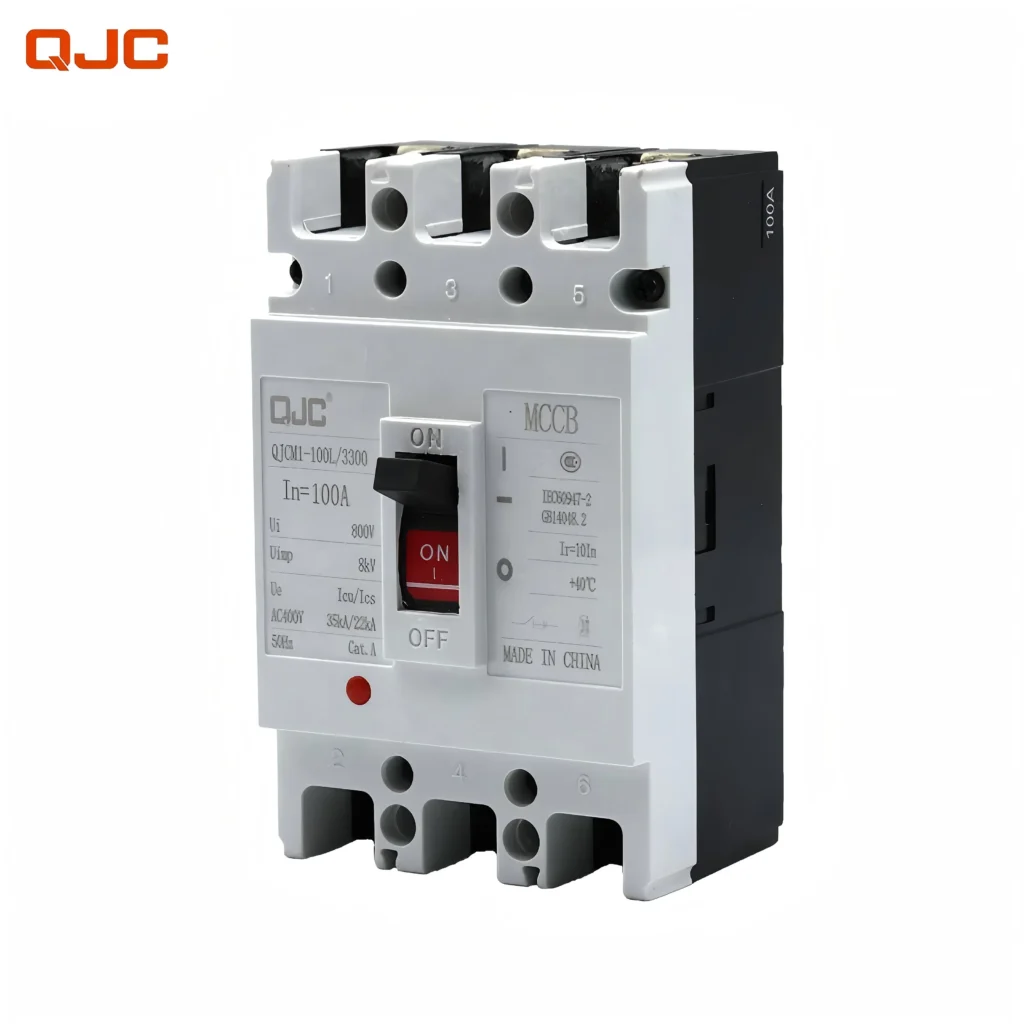
Electronic Trip MCCB detects the line current in real time through the current transformer and transmits the signal to the electronic tripping unit ( a dedicated analog / digital integrated circuit ).
It compares the detection value with the preset value. When it exceeds the set value, it issues an instruction to make the electromagnet or torque motor act, triggering the mechanical mechanism to trip.
Core Features:
- Height Adjustable: Users can accurately set the current value and action time of long delay, short delay, instantaneous and other levels of protection in a wide range.
- High Precision: the action characteristics are basically not affected by the ambient temperature and the repeatability is good.
- More features: Usually with ground fault protection function, some also with LED status indication or simple alarm contacts.
Microprocessor-based MCCB
Microprocessor-based MCCB is the most advanced and powerful MCCB at present, which realizes the electronic comprehensive intelligent upgrade. It is often used in modern intelligent buildings, data centers, factory automation, new energy and other occasions that require highly intelligent management and energy efficiency analysis.
Working Principle: The core is a microprocessor ( MCU / MCU ). It continuously collects current, voltage and even power signals from high-precision sensors.
Through its built-in algorithms and programs, it can not only perform complex protection calculations, but also achieve measurement, monitoring, communication and self-diagnosis.
Core Features:
- Comprehensive Protection and Measurement: In addition to basic protection, it can also provide comprehensive power parameter measurement such as current, voltage, power, electric energy and frequency.
- Powerful Communication and Integration Capabilities: Standard communication interfaces ( such as Modbus-RTU, Profibus-DP ) can be integrated into intelligent power distribution systems or energy management systems to achieve remote monitoring, parameter setting and data reading.
- Fault Recording and Analysis: The type, time and parameters of the last or more faults can be recorded to facilitate troubleshooting.
- Self-diagnosis and Early Warning: It can monitor its own state and warn before potential faults occur.
Benefits of Molded Case Circuit Breaker
The molded case circuit breaker ( MCCB ) is known for its ability to withstand high currents and customizable electrical system protection capabilities. The following is a detailed description of their core features.
Adjustable Stroke Setting: It allows to fine-tune the stroke threshold according to different load requirements, providing protection flexibility.
High Rated Current: Can withstand a wide range of current usually from 16A to more than 1600A, suitable for low power and high power circuits.
Durable Molded Housing: Ensures that internal components are protected from dust, moisture and mechanical shocks to increase the life of the circuit breaker.
Thermal Magnetic Tripping Mechanism: Combined with overload thermal protection and short-circuit magnetic protection to improve safety.
Wide Voltage Range Compatibility: Supports a variety of voltage levels up to 1000 volts, suitable for different systems.
Durability and Reliability : Multiple trips without performance problems to ensure long-term use of reliability.
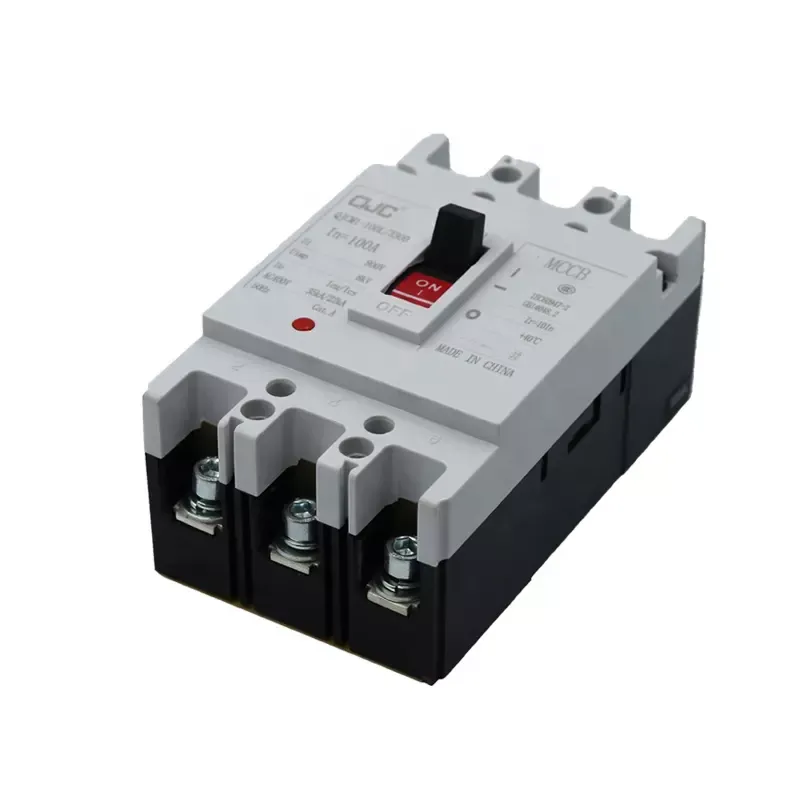
Application of Molded Case Circuit Breaker
In applications, molded case circuit breakers are designed to withstand high currents especially on expensive devices. You will often find that MCCB is commonly used in industrial machinery such as the following equipment.
Motor
The molded case circuit breaker protects the motor by setting the adjustment inrush current and providing the required delay. When it is done correctly, the motor can prevent overload and does not trigger the tripping mechanism.
Welding Machinery
The welding machine uses high current, and the ordinary circuit breaker cannot bear it. MCCB can protect the welding equipment by connecting the welding machine to its own circuit breaker.
Generator
It is well known that generators generate a large amount of current and require expensive generator sets. In order to protect the connection circuit and the generator from system failures, it is essential to have a molded case circuit breaker because it can withstand high rated currents and protect the generator when needed.
Capacitor Bank
A molded case circuit breaker reduces current and thus corrects the ‘ power factor ‘ of commercial and industrial systems.
Editable Travel Mode
These settings enable MCCB to be used in low current appliances in the home. This makes it a versatile device that can be adjusted between low and high current settings.
Electric Feeder
The molded case circuit breaker has adjustable settings to cope with high currents. If applied to an electric feeder that generates hundreds of amperes of current, molded case circuit breaker can easily consume this energy.
Factors to Consider When Selecting the Right Molded Case Circuit Breaker (MCCB) for Your Electrical System

Choosing the appropriate molded case circuit breaker is very important to ensure the safety and efficiency of the electrical system. Here are some basic factors to consider when choosing a MCCB :
Current Rating
Ensure that the current rating of MCCB matches the maximum load of the system. The circuit breaker should be able to withstand the full range of current expected in the electrical system that includes any potential overload. The rated frame current ( Inm ) and rated current ( In ) are considered to determine the size and tripping settings of the circuit breaker.
Braking Capacity
The MCCB must have a sufficiently high breaking capacity to withstand the fault current that may occur during the short-circuit process. The final short-circuit breaking capacity ( ICU ) and the operating short-circuit breaking capacity ( ICS ) are checked to ensure that they can effectively respond to short-circuits without failure.
Voltage Rating
The voltage rating should match or be higher than the system operating voltage. Ensure that the rated operating voltage ( UE ) of the MCCB is suitable for the expected application. The rated insulation voltage ( Ui ) represents the maximum voltage that the circuit breaker can resist under laboratory conditions, providing a safety margin.
Travel Characteristics
According to the system load and application type, the MCCB with appropriate travel characteristics is selected. The thermal magnetic multi-point chain plate is often used for general protection, while the electronic multi-point chain drop plate provides faster and more accurate tripping for the sensitive system.
Size & Installation Requirements
Select the MCCB suitable for your electrical distribution box. If space is limited, consider a compact design. Ensure that it meets your specific installation and installation standards.
Standard Compliance
Ensure that the selected MCCB meets local safety standards and regulations. Depending on your region, it should be certified by relevant regulatory agencies such as UL, IEC or ANSI.
Maintenance & Durability
Choose MCCB with long service life and easy maintenance. Some devices are rated more supported, which is very beneficial in high demand environments.
Cost & Performance
Evaluate the cost of MCCB and the protection it provides. Although it ‘s tempting to choose a cheaper option, safety and long-term performance are crucial. More expensive MCCB may provide better protection and longer service life, saving you the cost of maintenance and replacement.
Choose MCCB from QJC Electric

Our MCCB series products have undergone rigorous laboratory tests, not only in line with IEC standards, but also pay more attention to the stability under actual operating conditions.
Please contact us today immediately, we can provide you with a professional mould case circuit breaker.
What is the difference between MCB and MCCB?
MCB ( miniature circuit breaker ) is suitable for low current ( usually ≤ 100A ), fixed trip curve, residential or light industrial use ; MCCB is stronger in voltage and capacity, suitable for higher current ( up to thousands of A ), adjustable tripping, larger short-circuit capacity, and suitable for industrial applications.
Can l use a circuit breaker as an isolator?
Not recommended. The circuit breaker is designed for fault protection, infrequent switching ; the isolator is designed for isolation under load. If frequent use of circuit breaker switches may lead to contact burning or arc risk, it is best to use a dedicated isolator.
Which is better, ELCB Or MCCB?
ELCB ( leakage circuit breaker ) specially detects leakage protection personal safety ; mCCB focuses on overload / short circuit protection. Reddit mentioned that they are functionally complementary, depending on the scene, if the leakage protection ELCB is better, the industrial load MCCB is better.
What causes MCCB to trip?
Common causes : overload, short circuit, loose connection lead to fever, equipment failure or aging. Common cases include heat accumulation caused by high resistance connection, or excessive load such as excessive starting current of the motor.
Are MCCBs safer than fuses?
Depending on the situation. MCCB is resettable, adjustable and easy to maintain. The fuse has faster response, lower cost and more reliable for high fault current. Reddit users believe that fuses are safer in some high-short-circuit scenarios, but MCCB is more convenient for long-term use.
Can MCCB detect earth leakage?
Standard MCCB cannot only protect overload / short circuit ; it requires an integrated leakage module ( such as RCCB combination ) to detect. Only MCCB has no leakage function, and additional ELCB or RCD is required.