Power stability is the primary factor to ensure the normal operation of modern electrical and industrial equipment. Because power fluctuations are still a common danger of expensive electronic devices. The overvoltage protector is different from the ordinary surge protector. This special DIN rail voltmeter can provide you with powerful and adjustable protection through the entire circuit.
What Is an Overvoltage Protector?
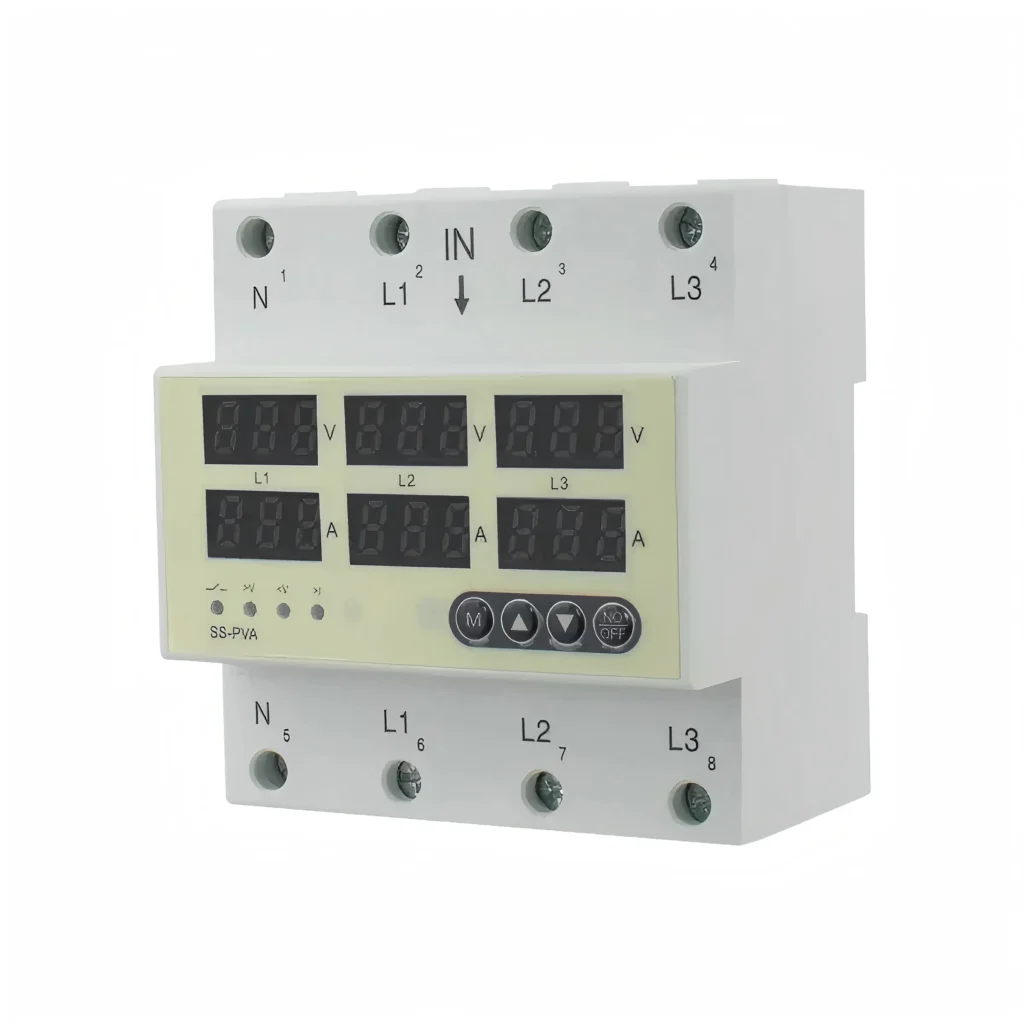
The overvoltage protector cuts off the load power supply when the voltage exceeds the preset safety limit. Different from the surge protective device (SPD) that introduces instantaneous spikes (such as lightning strikes) into the ground, it is usually also called a voltage monitoring relay, which prevents continuous high voltage damage to sensitive components by physically disconnecting the circuit.
Why Do You Need an Overvoltage Protector?
Modern power grids are usually stable, but zero line drift (floating neutral point), transformer failure or sudden load rejection can cause the voltage to soar to well above 220V. If there is no overvoltage protector, this continuous energy is nowhere to go and can only flood into your TV, refrigerator or air conditioning system, resulting in immediate damage to the device or shortened life.
The Role of an Overvoltage Protector
DIN rail voltmeter is usually integrated in modern overvoltage protection relays. This function transforms passive safety devices into active monitoring tools.
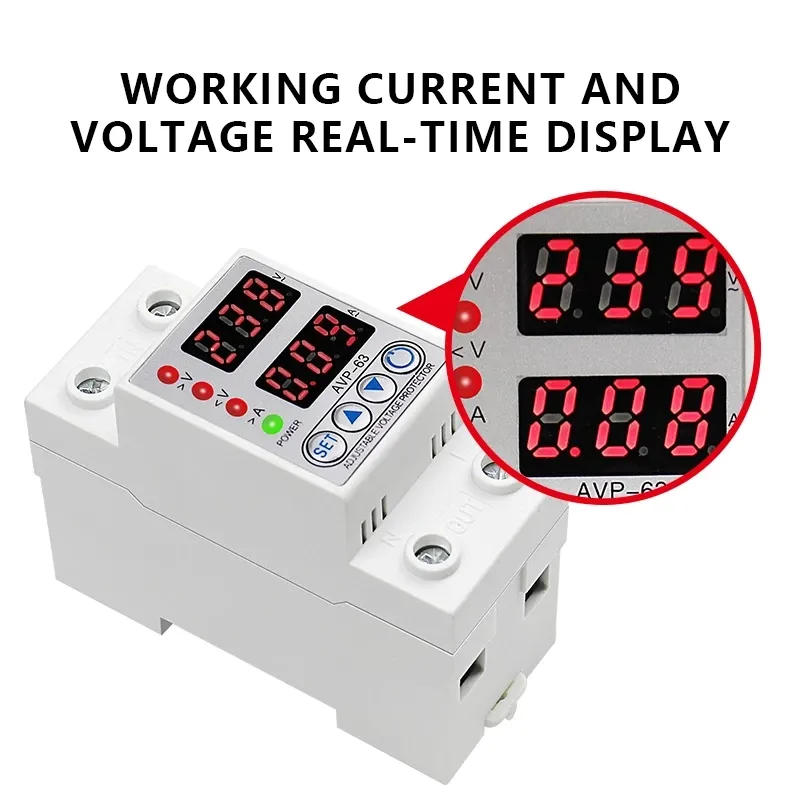
- Real-Time Monitoring: The overvoltage protector can display the home or factory voltage value in real time.
- Fault Diagnosis: When power failure occurs, the display usually retains the latest fault record ( such as overvoltage or undervoltage ), which is convenient for troubleshooting.
- Save Space: The product adopts the design of guide rail module, which integrates protection and voltage monitoring, and saves the space of the distribution box.
How Does an Overvoltage Protector Work?
Its working principle is divided into four steps:
- Detection: The overvoltage protector continuously detects the input voltage..
- Comparison: The overvoltage protector compares voltage with the user-set threshold (such as 230V system is usually set to 270V).
- Action: once the voltage exceeds the limit, the internal relay acts to cut off the load power supply.
- Recovery: Once the voltage is stabilized within a safe range within a specific duration (delay time), the overvoltage protector will automatically reconnect to the power supply.
Note: Many advanced devices also have undervoltage protection functions. If the voltage drop is too low (insufficient voltage/brown electricity), it will cut off the power supply, which is also destructive to the motor and compressor.
How to Choose the Right Overvoltage Protector?
When selecting the best overvoltage protector, please ensure that it meets the following criteria:
- Adjustable Threshold: Can manually set the cut-off voltage limit.
- Automatic Recovery (Self-Reset): Once the power grid is stable, the device should be automatically reopened without manual closing.
- Response Time: Select a device with an action time of less than 0.1 seconds.
- Rated Current: Ensure that current specifications (e.g. 40A, 63A) match the main circuit breaker.
- Digital Display: Preferably with DIN rail voltage and current integrated digital display model.
How to Install an Overvoltage Protector?

Warning: There is danger in operating the main switchboard. If you are not a certified electrician, please hire a professional. Make sure that the main circuit breaker is turned off before touching any wire.
Step 1: Preparation
Identify the input fire line (L) and zero line (N) in the distribution box. Make sure you have available standard 35mm DIN rails.
Step 2: Installation
The overvoltage protector is buckled on the DIN rail. It should be located after the main circuit breaker (MCB), but before each branch circuit breaker.
Step 3: Wiring

The output of the main circuit breaker is connected to the “Input/Line” of the protector. Connect the “Output” of the overvoltage protector to the bus bar or branch circuit breaker.
| Comparison Table of Surge Protection Device and Overvoltage Protector | ||
|---|---|---|
| Feature | Surge Protection Device (SPD) | Overvoltage Protector (Relay) |
| Primary Function | Diverts extremely short, high-energy spikes (Lightning). | Disconnects power during sustained voltage swells. |
| Duration of Fault | Microseconds. | Seconds to Minutes (Sustained). |
| Mechanism | Metal Oxide Varistor (MOV) clamps voltage. | Relay physically opens the circuit. |
| Reusable? | Degrades over time/hits. | Designed for thousands of switching cycles. |
| Visual Feedback | Usually just a green/red flag. | Often includes a DIN rail voltmeter display. |
Learn more article about SPD: Your Easy Guide to DC Surge Protective Device
Common Causes of Overvoltage
In order to effectively use the overvoltage protector, we first need to understand the source of the dangerous voltage fluctuation in the power grid. Although the power grid is usually stable, the following factors may cause a sudden increase in voltage that threaten your DIN rail voltmeter reading and electrical safety.
Zero Line Open Circuit or Poor Contact
Zero line disconnection or poor contact is the main cause of residential and commercial electricity accidents. In the three-phase four-wire system, if the zero line (N line) breaks or has poor contact at the transformer end or the household end, the zero line drift phenomenon will occur.
The original 220V phase voltage may soar to 380V or even higher in an instant according to the load imbalance, directly burning all connected appliances.
The Load of Power Grid Fluctuates Violently
When the large industrial equipment (such as motor, electric furnace) in the same power grid area suddenly stops running or cuts off the power supply, the power grid load will drop instantly.
This sudden “load rejection” will lead to a short sharp rise in the supply voltage before the regulation mechanism is involved.
Distributed Photovoltaic (Solar) Grid-Connected
With the popularity of household rooftop photovoltaics, distributed photovoltaic (solar) grid-connected is becoming more and more common. In order to transport power back to the grid, the photovoltaic inverter must increase the output voltage to a level slightly higher than the grid voltage.
At noon when the sun is full and the local load is light, the voltage in some areas may continue to be high (more than 250V), frequently triggering overvoltage protection.
The Device is close to the Transformer Source
In order to offset the line loss (voltage drop) caused by long-distance transmission, power companies usually adjust the output voltage of the transformer to a slightly higher level.
If you live close to a transformer or distribution room, the base voltage you receive may be high all year round (e.g. 245V +), leaving the appliance running at the edge of overvoltage for a long time.
High and Low Voltage Line Lap (Accident)
In rare cases, due to bad weather (high winds, downed trees) or car accidents hitting the poles, high-voltage transmission lines and low-voltage distribution lines are accidentally contacted. This will lead to a devastating voltage surge into the home circuit. At this time, only the over-voltage protector with extremely fast response can cut off the physical connection in an instant and save the fire risk.
Buy Overvoltage Protector From QJC Electric
Investing in high-quality overvoltage protectors is one of the most cost-effective ways to protect your home or business from electrical anomalies. Don’t wait for the refrigerator to burn or the computer power explosion to take action. Contact the QJC Electric team today to upgrade your power distribution system.
You Maybe Also Like Read:
The Basics of Molded Case Circuit Breaker – MCCB
Distribution Boxes Explained: Types, Functions, and Essential Safety Tips
What is the ideal setting of an overvoltage protector?
For the standard 220V-240V system, it is generally recommended to set the high-voltage cut-off (upper limit) to 270V and the low-voltage cut-off (lower limit) to 170V. For 110 V systems, 140 V is a common upper limit threshold. Please be sure to refer to the instructions of your home precision appliances.
Can an overvoltage protector replace the main circuit breaker (air switch)?
No. This is a common misunderstanding. Most overvoltage protectors (self-reset overvoltage and undervoltage protectors) are only designed to monitor voltage fluctuations and do not have short-circuit protection or overload protection functions. Therefore, it must be used in series with your main miniature circuit breaker (MCB) and installed after the main circuit breaker to ensure full electrical safety.
Can I use the overvoltage protector with the whole house surge protector?
Yes! In fact, you should do so. The surge protection device (SPD) mainly handles microsecond-level lightning spikes, while the overvoltage protector handles grid voltage fluctuations that last for several seconds or even longer. The two functions are different, and the combination of the two can provide the most complete protection.
Does the DIN rail voltmeter consume a lot of power?
Not big. The power consumption of modern digital monitoring relays is usually very low (generally less than 2W). Even if they are operated around the clock, the impact on electricity bills is minimal and very efficient.
Why does my overvoltage protector trip frequently?
If your device frequently trips, please first observe the reading of the rail-type voltmeter.If the voltage displayed does exceed the standard, it indicates that the device is working properly and protects your appliance from damage.If the voltage reading is in the normal range (such as about 220V), it may be that your threshold is set too sensitive (too narrow), or the relay of the device itself fails. It is recommended to relax the upper and lower limits before observation.