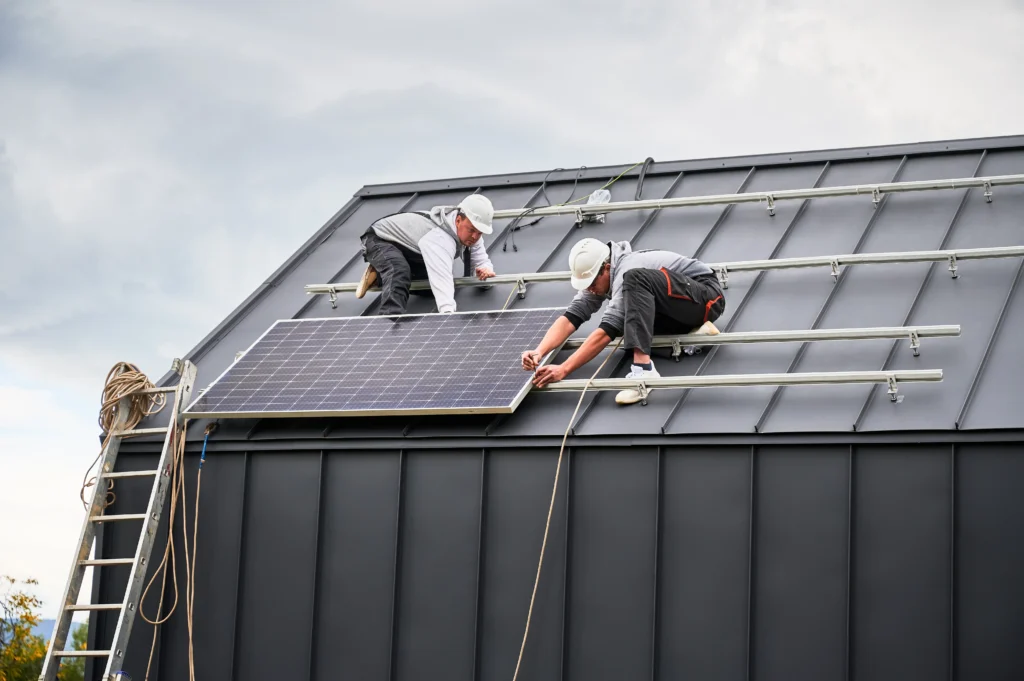
When building solar power generation systems, most people pay attention on the conversion efficiency of solar panels or the quality of inverters. However, in any durable solar array, the unknown hero is actually a photovoltaic cable. This dedicated line is often responsible for the safe transmission of direct current (DC) from the battery board to the inverter under the worst environmental conditions.
Using the wrong wire will reduce the efficiency of the system and a major security risk. In this comprehensive guide, we ‘ll delve into what a photovoltaic cable is, how it ‘s different from an ordinary wire, and why choosing the right specifications guarantees your investment in renewable energy.
What is Photovoltaic Cable?
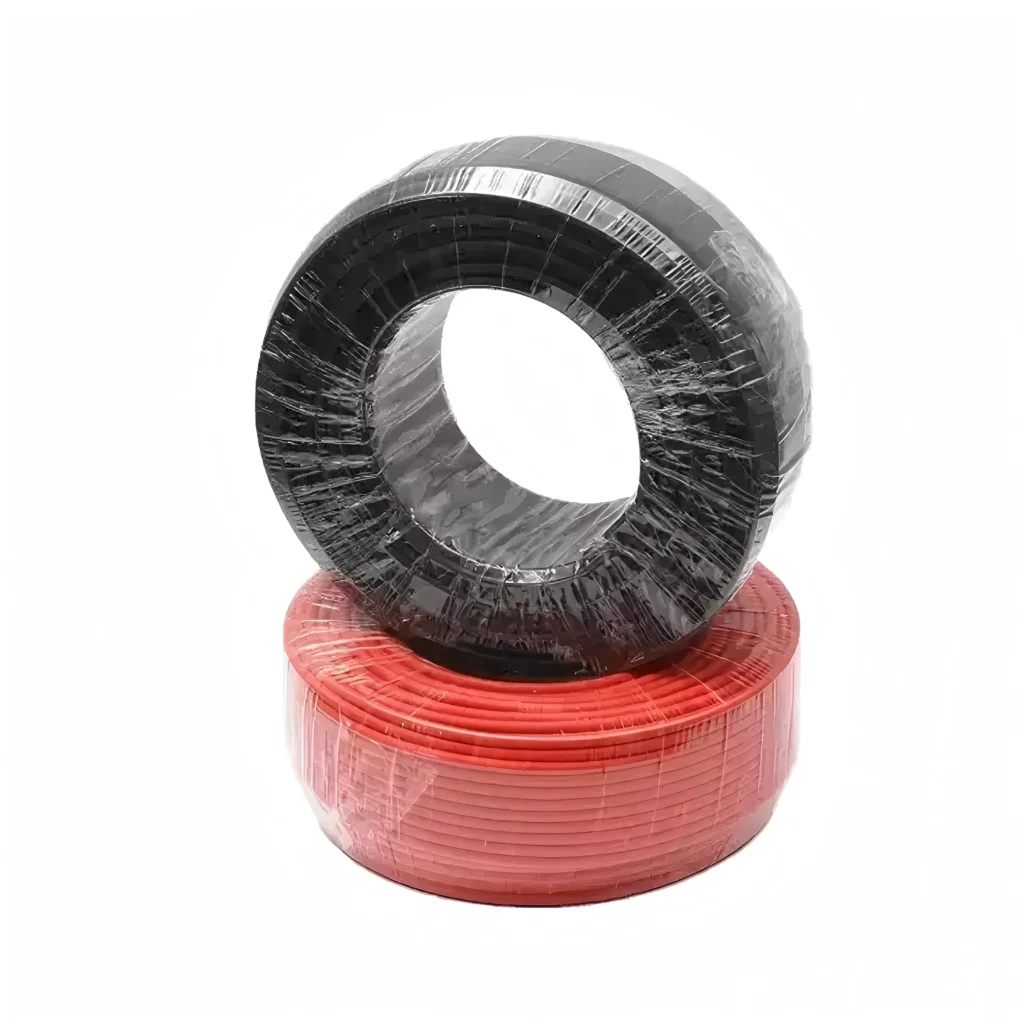
A photovoltaic cable is a single-core wire designed specifically for interconnecting components of a solar power generation system. Different from standard building wires, photovoltaic cables can withstand extreme environmental pressure through special engineering design.
Solar panels are typically installed on rooftops or in open fields, exposed to extreme heat, cold, rain and the most destructive intense ultraviolet (UV) radiation. Standard PVC insulated wires will crack and fail within a few years under these conditions. High-quality photovoltaic cables have good resistance to ultraviolet, humidity and temperature fluctuations due to the use of cross-linked polyethylene (XLPE) insulation.
Why Do You Need a Specialized Photovoltaic Cable?
You might ask: Can I connect my solar panel with a normal THHN wire? The short answer is: No – at least not for bare wiring on the roof.
In the table below, we detail the reasons why dedicated cables must be used.
| Comparison Table: Photovoltaic Cable vs. Standard Building Wire | ||
|---|---|---|
| Feature | Photovoltaic Cable (PV Wire) | Standard Building Wire (THHN/THWN) |
| Insulation Thickness | Thicker, robust XLPE insulation | Thinner PVC insulation |
| UV Resistance | Extremely High (Rated for direct sunlight) | Low to Moderate (Requires conduit) |
| Temperature Rating | -40°C to +90°C (up to 120°C dry) | Typically -10°C to 90°C |
| Moisture Resistance | Excellent (Suitable for wet locations) | Moderate (THWN is wet rated, but less durable) |
| Flexibility | Stranded core for high flexibility | Often solid or stiff stranded |
| Lifespan | 25-30+ Years (Matches solar panels) | < 10 Years if exposed to elements |
The design life of the photovoltaic cable is designed to match the 25-year warranty period for solar panels. The use of inferior wires will cause weak links in the system and may require expensive maintenance costs in the future.
Types of Solar Cables: PV Wire and USE-2
When buying a solar cable, you may encounter two main identifiers: PV Wire and USE-2. Although the two are commonly used in solar energy applications, there are obvious differences in the National Electrical Code (NEC).
What is USE-2 line?
The USE-2 (Underground Service Entry Line) has long been the standard for connecting solar modules. It is rated for wet environments at 90 °C and is resistant to sunlight. However, compared with modern PV lines, its insulation layer is usually thinner and its voltage rating is usually only 600V.
What is PV Wire?
Photovoltaic cable (marked as PV wire) is a newer standard introduced to meet the needs of high-voltage non-grounded arrays.
- Insulation Layer: It has a thicker sheath than USE-2 and provides better physical damage protection.
- Voltage: The rated voltage is usually as high as 2000V, while the USE-2 is usually capped at 600V.
- Flame Retardancy: The photovoltaic cable must pass the Vertical Burning Test (VW-1) and more suitable for roof mounting.
QJC Electric team suggested that photovoltaic cable is a better choice than USE-2 for modern grid-connected systems using non-grounded inverters.
How to Choose the Right Size of Photovoltaic Cable?
Selecting the correct diameter (thickness) of photovoltaic cable can effectively prevent energy loss and potential fire hazards. In the United States, wire dimensions are usually measured using the American Wire Gauge (AWG).
Understand Current and Voltage Drop
The smaller the AWG value, the thicker the wire. Thicker wires can carry more current and have lower resistance.
- 10 AWG: The most common size in residential solar lines. Depending on the temperature class, it can handle currents up to 30-40 amperes.
- 12 AWG: It is usually found on the lead-out line of small solar panels.
- 8 AWG or 6 AWG: For long-distance transmission or confluence of multiple strings to reduce voltage drop.
If the wire is too thin relative to the transmission distance, a ‘voltage drop’ will occur. This means that the energy generated by the battery board is lost in the form of heat in the wire before reaching the inverter. A general rule of thumb is to control the voltage drop within 2 %.
Before purchasing a photovoltaic cable, you can use an external voltage drop calculator to verify your selection.
The Importance of UL 4703 Standard
When purchasing photovoltaic cables, it is necessary to ensure that they meet recognized safety standards. The gold standard is UL 4703 in the USA.
What does UL 4703 Certify?
Sunshine Resistance: The cable has been strictly tested to ensure that the sheath will not degrade under long-term ultraviolet irradiation.
Low Temperature Flexibility: The cable can be bent and operated at temperatures as low as − 40 °C without cracking.
Directly Buried Rating: Many UL 4703 certified PV cables are rated as directly buried, which means that they can be directly buried underground without ducts (although ducts are still recommended for physical protection).
Always look for the ‘UL Listed’ on the cable sheath. If you purchase a cheap unbranded photovoltaic cable without this certification, you may are at risk of an electrical fire.
Installation Tips to Maximize Efficiency of Photovoltaic Cable
If improperly installed, even the best photovoltaic cables will fail. Here are three tips to make a safe installation:
Proper Cable Management
Loose cables drift in the wind, rubbing the rough roof surface or the sharp edges of the support system. Over time, this friction will wear through the insulating layer that lead to ground fault. Be sure to use a UV-resistant clamp to tightly fasten the photovoltaic cable to the component frame.
Correct Connector
The most common fault point in the solar wiring system is the connection point. Most PV lines use MC4 connectors. At the same time, we should also use the correct crimping tools. The ordinary pliers can not form airtight seal, which will lead to oxidation, high resistance, and eventually lead to the melting of the connector.
Minimize the Catheter Distance
Although the photovoltaic cable is strong, it is expensive. Plan your routing path to make it as short and direct as possible. This can not only save material costs, but also improve system efficiency by reducing resistance.
Conclusion
By selecting high-quality photovoltaic cables with tin-plated copper conductors that meet the UL 4703 standard, you can ensure that the system is safe and efficient for decades to come.
Ready to start your solar project? Check out our website to choosing the best solar inverters and our DIY solar panel installation list.
Can I connect a solar panel with an ordinary battery connector?
No. Although Battery Cables are thick and soft, they usually lack the UV-resistant insulation required for roof exposure. Using them outdoors violates electrical specifications and poses a serious safety risk. Long-term exposure can cause the insulation layer to brittle and fall off.
Whether red or black is better for solar wire?
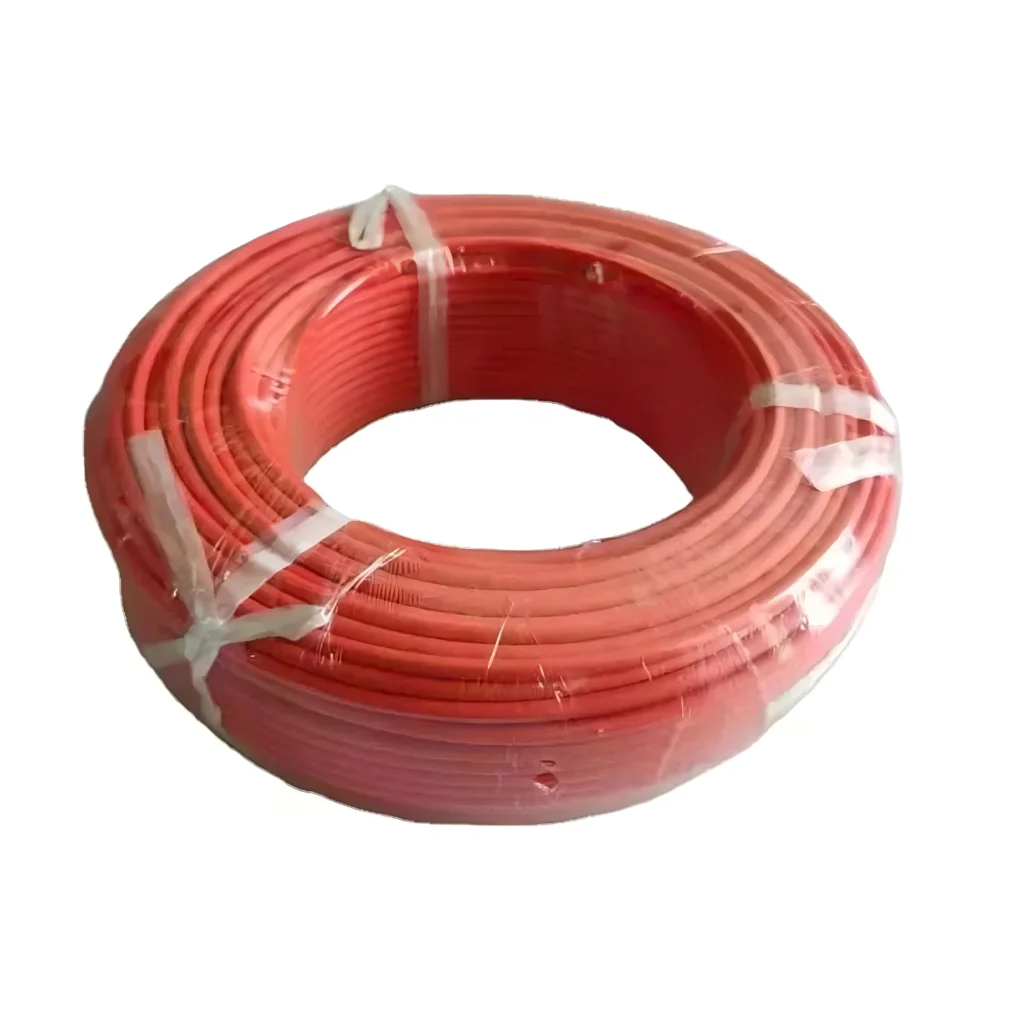
In terms of electrical conductivity, there is no difference between red and black photovoltaic cables. However, the industry is accustomed to using red to represent the positive electrode (+) and black to represent the negative electrode (-). This color discrimination is very important, which helps to prevent polarity inversion errors during installation, thereby avoiding instantaneous damage to expensive inverters.
How deep should the photovoltaic cable be buried?
If the cable is rated as Direct Burial, the NEC specification generally requires a burial depth of 24 inches (about 60 cm) to prevent accidental damage during excavation. If the cable is inserted into a rigid metal conduit (RMC), the depth requirement may be reduced to 6 inches (about 15 cm).
Solar cabling should use solid wire or multi-strand wire?
Most photovoltaic devices strongly recommend the use of Stranded Wire. Due to thermal expansion and contraction and the influence of wind, solar panels and brackets will move slightly. Solid wire is hard, which is prone to metal fatigue or even fracture under long-term micro-vibration. The multi-strand wire has better flexibility and can better adapt to the physical stress of the outdoor environment.
How long is the service life of photovoltaic cable usually?
High-quality, UL 4703-compliant PV cables typically have a design life of more than 25 to 30 years, designed to be in sync with the life of solar panels. By contrast, if the non-dedicated ordinary building wire is exposed to the outdoors, usually in 5 to 8 years will be due to ultraviolet erosion and lead to insulation failure.