In industrial automation and modern home electrical systems, voltage spike or sudden drop in power can destroy sensitive electronic devices in milliseconds. As a key component in the distribution box, the DIN rail voltmeter monitors and displays the voltage of the circuit or electrical equipment in real time.
What is a DIN Rail Voltmeter?
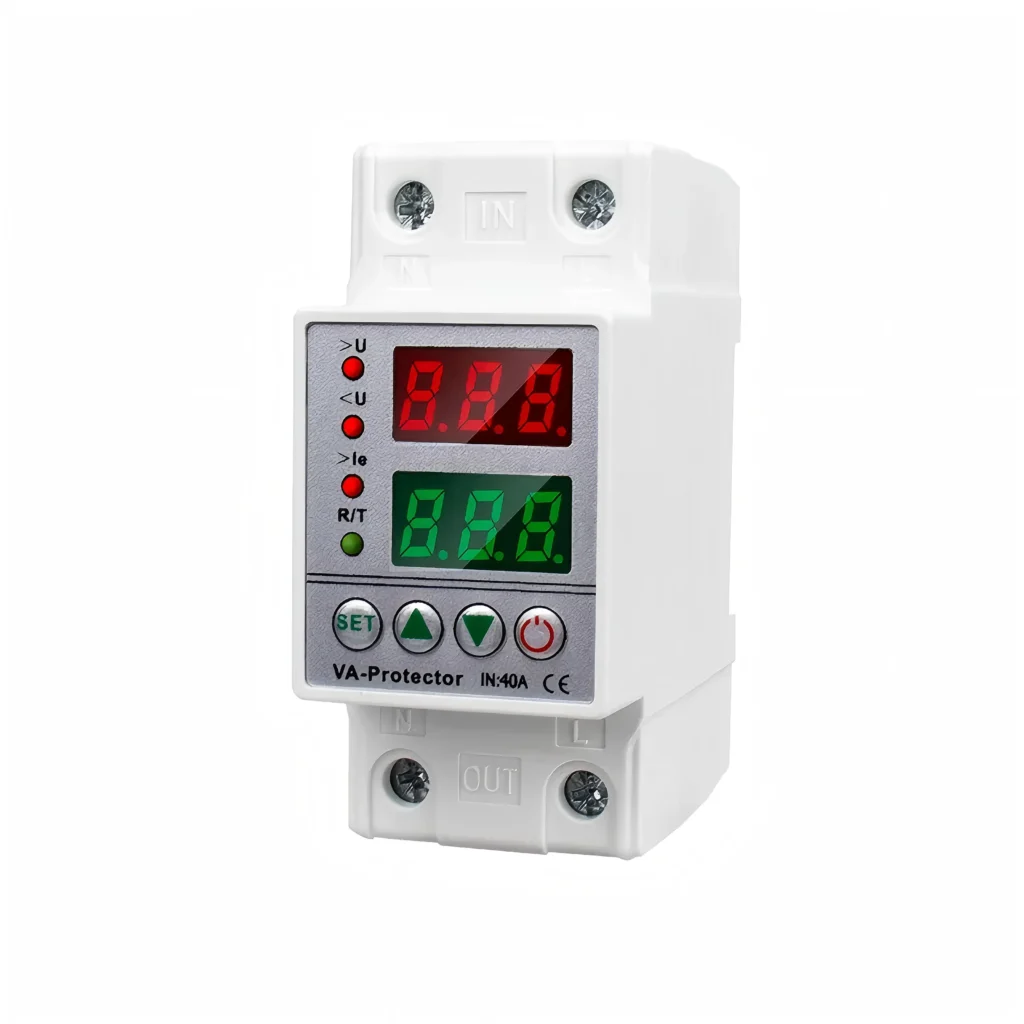
The DIN rail voltmeter is a compact electrical measuring device designed to be mounted on a standard DIN rail (a metal rail that is widely used in equipment racks to install circuit breakers and industrial control equipment). Unlike handheld multimeters for temporary testing, DIN rail voltmeters are permanently installed for continuous, real-time monitoring of voltage levels in the circuit.
key Features:
- Installation: Standard 35mm DIN rail.
- Display: Usually digital display (LED or LCD) for easy reading.
- Function: Real-time monitoring of voltage (V) and often the current (A).
- Integration: It can be seamlessly installed side by side with circuit breakers and PLC (programmable logic controller).
Modern versions of DIN rail voltmeter are usually smart – they not only measure, but also actively intervene. They combine the functions of the instrument and the protection relay. When the parameters exceed the safe range, they can effectively cut off the power supply.
Why Do You Need DIN Rail Voltmeter?
Voltage instability is the main risk of electronic products. Fluctuations in the power grid, lightning strikes or unstable power sources (such as generators) can cause voltage deviations from the standard 110V, 220V or 230V.
The Danger of Overvoltage
Overvoltage refers to that the power supply voltage exceeds the safe operation limit of the equipment, which is usually caused by lightning strike, surge or line fault, which may lead to circuit burning, equipment scrapping or even fire. Integrating an overvoltage and undervoltage protector in the distribution box can realize real-time monitoring and timely trigger protection (such as surge protector).
The Danger of Undervoltage
Undervoltage, or voltage sag, refers to the voltage drop below the required level that results in low operating efficiency of the electrical system. This may cause overheating of the motor, darkening of the light and accidental failure of the computer or data loss.
The overvoltage and undervoltage protector provides accurate voltage readings and alerts, enabling you to actively adjust to stabilize the power supply. Installing a DIN rail voltmeter not only helps to quickly diagnose these problems, but also optimizes energy efficiency and reduces long-term wear and tear of infrastructure.
How Does A DIN Rail Voltmeter with Protection Work?
Monitoring: Continuous sampling of AC voltage by DIN rail voltmeter.
Comparison: The internal microprocessor compares the real-time voltage with the threshold set by the user (e.g., low limit of 170V, high limit of 270V).
Triggering:
If Voltage > High Limit → Overvoltage protector logic activation.
If Voltage < Low Limit → Undervoltage protector logic activation.
Action: The internal relay is disconnected and the load is cut off to prevent damage.
Recovery: Once the voltage returns to normal within a set delay time (e.g. 60 seconds), the device automatically reconnects to the power supply.
Note: This “Auto-Recovery” function is the main difference between modern DIN rail protectors and standard fuses that require manual replacement.
Standard DIN Rail Voltmeter vs. Protection Relay
To help you choose the right equipment, the following is a comparison of standard monitoring and active protection features.
| Comparison Table: Standard DIN Rail Voltmeter vs.Protection Relay | ||
|---|---|---|
| Feature | Standard DIN Rail Voltmeter | Voltage Protection Relay |
| Primary Function | Display Voltage | Monitor & Disconnect Power |
| Protection | None (Passive) | Active (Over/Under Voltage) |
| Adjustability | N/A | Adjustable Cut-off values |
| Recovery | N/A | Auto-Reset / Delay Timer |
| Cost | Low | Medium |
Installation Guide of DIN Rail Voltmeter: Step-by-Step
Although the installation of DIN rail voltmeter is very simple for qualified personnel, safety must be the first priority.
Safety First: Turn off the main circuit breaker. Use a hand-held multimeter to ensure that no current flows through.
Mounting: The DIN rail voltmeter card into the guide rail in the distribution box.
Wire: First, the input terminal of the autonomous circuit breaker is connected to the IN terminal of the device. The output terminal is then connected to the OUT terminal to supply power to your load (electrical appliance or shunt circuit breaker).
Check: Tighten all screws to prevent arcing.
Configuration: After turning on the power, the screen should light up. Configure your overvoltage protector limits (e.g. 250V) and undervoltage protector limits (e.g. 190V) using the “Set” button.
Tools Required:
- Screwdriver (Flathead/Cross)
- Wire Strippers
- Multimeter (for verification)
- PPE (Gloves/Goggles)
For detailed wiring diagrams, please refer to the electrical safety standards provided by IEEE or your local regulatory agency.
Advanced Features to Look For DIN Rail Voltmeter When Purchasing
When purchasing a DIN rail voltmeter, look for these specific parameters in the product description to ensure high quality:
- True RMS: Even AC waveform distortion can ensure accurate reading.
- Adjustable Delay: Prevents the device from tripping by mistake during a harmless instantaneous fluctuation (transient).
- Current Limiting: Some models also prevent overcurrents (amperes), acting as digital circuit breakers.
- Dual Display: Simultaneous display of voltage (V) and current (A).
Applications of DIN Rail Voltmeter
The versatility of the guideway voltmeter enables it to be applied in various fields. Understanding these applications can help users identify where unprotected vulnerabilities may exist.
Residential Homes
In modern smart homes, sensitive electronic products (such as IoT centers, smart refrigerators, and 4K TVs) are always connected. Lightning strikes a few miles away may cause surges. Installing a voltage protector in the primary user unit ensures that the surge does not reach these expensive devices.
Solar System
The grid voltage fluctuation is easy to cause the photovoltaic inverter to trip, and the DIN rail voltmeter can monitor the grid side voltage in real time. The dedicated DC device can also monitor the output voltage of the photovoltaic array to ensure power generation efficiency.
Industrial Motor Control Center
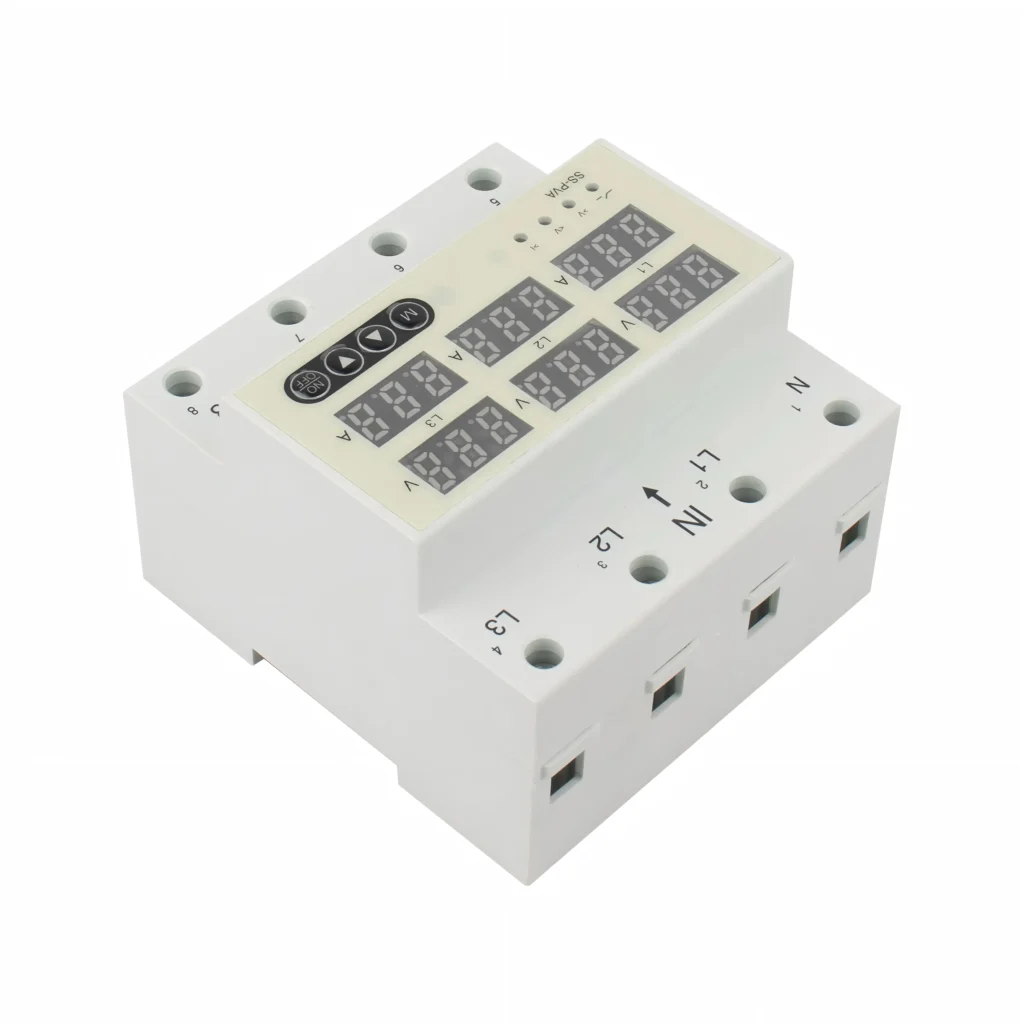
Three-phase voltage imbalance or lack of phase will cause motor vibration overheating. The three-phase over-voltage and under-voltage protection DIN rail voltage meter can continuously monitor the voltage of each phase, cut off the power supply when abnormal and avoid motor damage.
Remote Communication Base Station
Remote areas rely on generators for power supply, and the voltage output is unstable during the start-stop phase. The under-voltage protector can prevent the equipment from starting before the voltage is unstable and ensure the safe operation of the communication equipment.
Troubleshooting Common Issues of DIN Rail Voltmeter
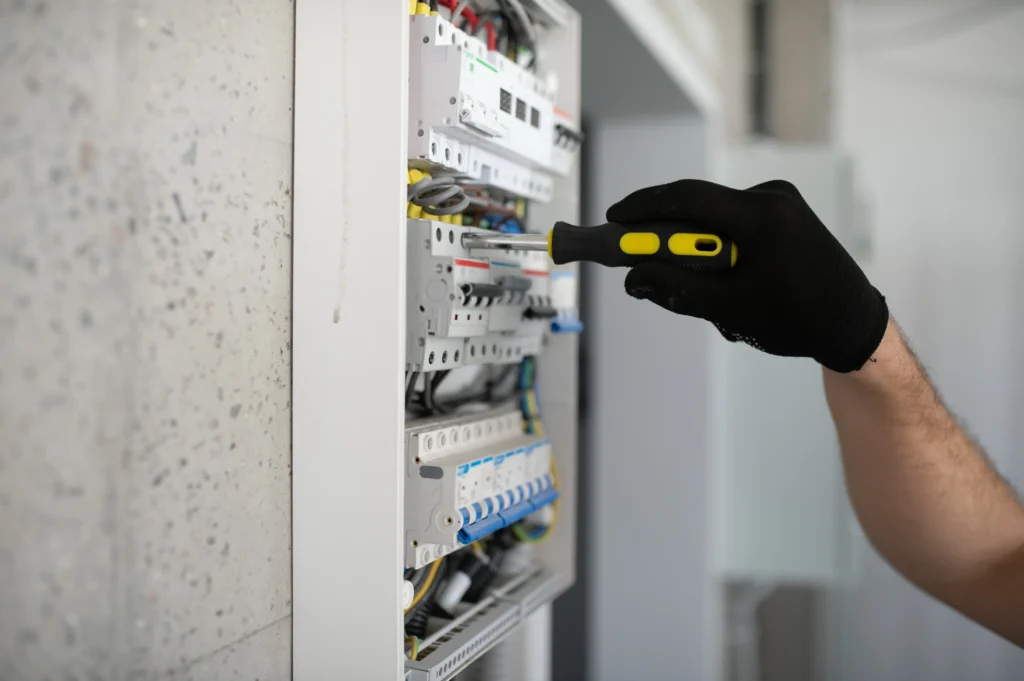
Even the best DIN rail voltmeter may encounter problems. Here are some troubleshooting common problems.
False Tripping
If the power is frequently cut off but other appliances appear to be normal, your protection threshold may be set too tight.
Repair: Relax the voltage protection threshold range. If your grid fluctuates naturally between 210V and 240V, set the protection to 200V and 250V respectively.
Screen Not Lighting Up
Repair: Check the input connection. If the DIN rail voltmeter is self-powered (obtaining power from the measured line), the loose zero line will cause it to fail to boot.
Buzzing Noise
Repair: This may occur in the case of loose internal relays or terminal screws of lower quality. Tighten all connections. If the noise persists, the device may need to be replaced. By understanding these details, you can ensure that your DIN rail voltmeter will function effectively in the years to come.
Conclusion
The DIN rail voltmeter combines real-time monitoring with integrated over-voltage protectors and under-voltage protectors, which provide a strong defense against the unpredictability of the power grid.
Buying a DIN rail voltmeter saves you a lot of money by preventing damage to expensive industrial machinery or household appliances. Don’t wait until the power surge occurs to prove the value of protection-upgrade your distribution box today.
Can a DIN rail voltmeter prevent fire?
Yes. Although it is not a fire extinguisher, it can eliminate fire hazards from the source.By using an integrated under-voltage protector, it can prevent the motor from overheating due to low voltage; through the over-current protection function, it can prevent line overload heating. Overheating and overload are the two most common causes of electrical fires.
Do I need professional and technical personnel to install an DIN rail voltmeter?
Although the device is “plug and play” in operation logic, the physical installation involves contact with strong electricity (main line). For your personal safety and to ensure compliance with local electrical building codes, it is strongly recommended to hire a certified electrician to install any DIN rail voltmeter. Improper wiring (such as reverse connection of zero fire line or untightened screw) may lead to equipment damage or even arc.
Does the DIN rail voltmeter consume too much power?
Very little. The vast majority of modern digital rail voltmeters and protectors have extremely low power consumption, usually less than 2 watts (2W). Its operating cost is almost negligible compared with the cost savings it provides for the safety of the entire circuit and the prevention of equipment damage.