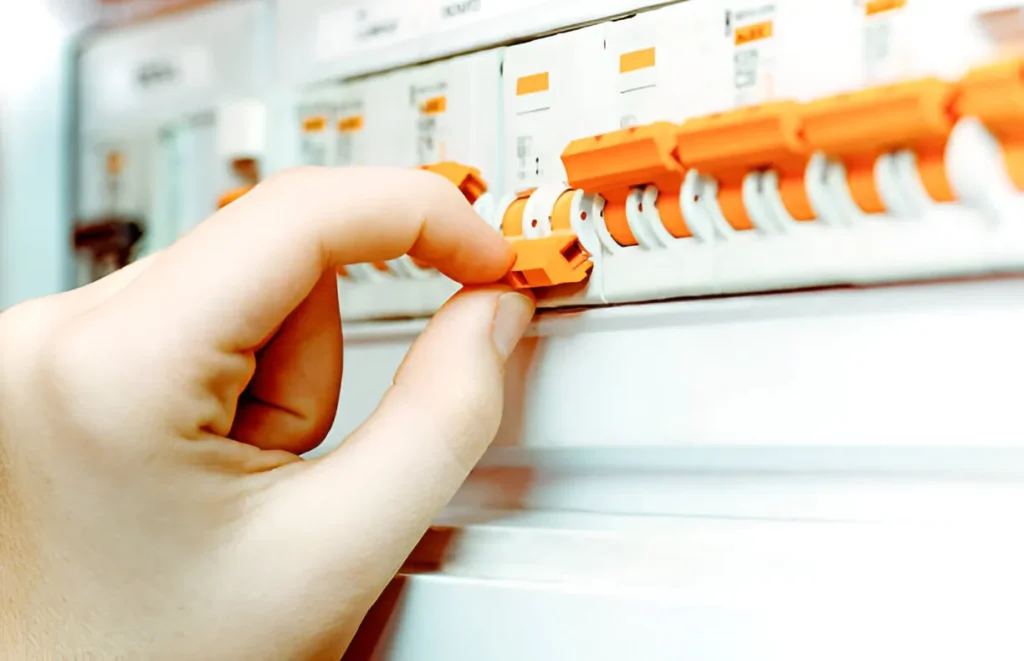
It’s essential for homeowners, renters, and landlords to grasp the significance of circuit breakers and their role. To start, it’s important to understand how electricity moves through a home, its source, and the function of a circuit breaker.
This article will explain what a circuit breaker is, explore the various types available, and highlight their importance.
What Is a Circuit Breaker?
A circuit breaker is a mechanical device within your home’s electrical system designed to interrupt power when the current becomes too high. It serves as a safety feature to protect the circuit from damage caused by overloads, short circuits, ground fault surges, or excessive current. In essence, it halts the flow of electricity whenever it detects a problem.
Electricity enters your home from the distribution grid through a service wire connected to the circuit. If the circuit exceeds its capacity—such as when multiple appliances are running simultaneously—an electrical overload can occur.
Before circuit breakers, homes relied on fuses, which would blow out under excess power and required replacement. Modern circuit breaker panels offer a clear advantage over fuses. They house multiple breakers that can be reset by flipping a switch instead of being replaced. When an overload happens, the breaker trips, cutting power to the affected circuit until it’s reset.
Why Circuit Breakers Are Important for Your Home
If you’ve ever asked, “Why is a circuit breaker necessary?” the answer is simple: it plays a critical role in protecting your home. Circuit breakers act as a safeguard, preventing potential electrical disasters.
Without them, your home would face risks like damaged wiring, malfunctioning appliances, and other plugged-in devices. These issues could result in costly repairs or replacements and even pose serious dangers such as electrical shocks, burns, or fires.

Different Types of Circuit Breakers
There are three main types of circuit breakers commonly used: standard circuit breakers, ground fault circuit interrupters (GFCIs), and arc fault circuit interrupters (AFCIs).
Standard Circuit Breakers
Standard circuit breakers respond to electrical overloads or short circuits. They stop the flow of electricity to prevent overheating, fires, or damage to connected devices.
Ground Fault Circuit Interrupters (GFCIs)
GFCIs shut off power to an entire circuit when they detect overloads, short circuits, or line-to-ground faults. These are essential in areas with potential moisture exposure, such as bathrooms, kitchens, basements, garages, laundry rooms, and crawl spaces.
Arc Fault Circuit Interrupters (AFCIs)
AFCIs guard against electrical arcs, which are unintended discharges or jumps in electricity from wires or cords. They are more sensitive to sudden electrical surges than standard breakers. As per the National Electric Code Section 210.12(A), AFCIs may be mandatory in newly constructed homes.
How to Identify a Tripped Circuit Breaker
A tripped circuit breaker is often indicated by a sudden loss of power in part or all of your home, accompanied by a distinct “click” sound. To check, locate your circuit breaker panel, typically hidden behind a metal door on the wall.
Inside the panel, look for switches in the “off” position. Some panels highlight tripped breakers with bright orange indicators, while others may not be as clear. To restore power, flip the switch back to the “on” position.
Occasionally, the breaker may sit between the on and off positions. In this case, move it fully to “off” before switching it back on to ensure it resets correctly. If power doesn’t return or the breaker trips again immediately, it’s best to contact an electrician for assistance.

When to Call an Electrician
To ensure your home remains safe and functional, your circuit breaker must operate correctly. If it malfunctions or shows signs of damage, it’s important to seek advice from an electrician. They can determine whether repairs or a replacement are needed.
Here are some warning signs that indicate it’s time to call an electrician:
- The circuit breaker trips repeatedly.
- You notice a burning smell or strange odor.
- The breaker feels hot when touched.
- There are buzzing or humming sounds coming from the panel.
- Lights flicker or blink frequently.
- Light bulbs burn out faster than usual.
- The panel shows signs of rust, corrosion, or damage.
- Burn marks appear on the panel or other electrical parts.
- A breaker switch is loose.
- The circuit breaker is old.
- You’re planning to upgrade your home’s electrical system.
Circuit Breaker Safety Tips for Homeowners
Here are some essential safety tips for managing circuit breakers in your home:
- Be cautious when flipping switches, especially if the panel isn’t labeled correctly, as this could harm sensitive electronics.
- If you notice damage, smell burning plastic, hear unusual noises, or see anything abnormal with your electrical panel, contact an electrician immediately.
- Pay attention to warning signs like flickering lights or frequent breaker trips, which may indicate outdated or unsafe wiring.
- Distribute appliances and devices across multiple circuits and outlets to prevent overloading a single circuit.
- Schedule a professional inspection of your electrical system every 10 years, or every five years for rental properties, to ensure it’s functioning safely.
Above all, if you feel unsafe, reach out to a licensed electrician. Their expertise can help restore power and identify any underlying issues. Avoid attempting repairs or replacements yourself unless you are confident in your abilities.